Climate change stories
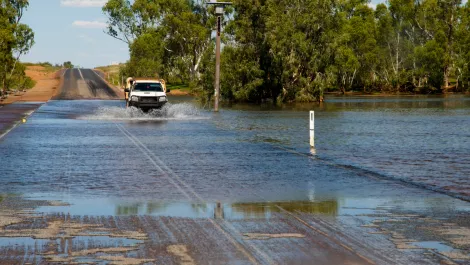
Businesses are facing an increased risk from extreme weather events, making rugged devices vital in the case of a disaster.
Artificial intelligence is being used to improve energy consumption at data centers, with hopes of lowering costs and meeting climate change goals.
Equinix has released its 2021 Sustainability Report which outlines progress, innovation and accomplishments on key ESG commitments.
The building and construction sector is one of the largest in the world economy, as well as one of the most energy-intensive polluting industries on the planet.
The new Auckland facility could cut New Zealand construction emissions by about 78,000 tonnes of CO2 a year, Holcim says.
Contaminated waste has long made the plastic hard to handle, but new chemical recycling plants are turning post-use polystyrene back into feedstock.
Public access to near real-time snow data should help alpine operators, rescuers and tourists plan for New Zealand winters.
Infrastructure firms face growing pressure to prove climate and social value as stimulus spending, disclosures and stakeholder scrutiny intensify.
Residents of Toyota's Woven City could test swappable cartridges that bring hydrogen power to homes and remote areas without pipes.
Redwood could help New Zealand meet its 2050 net-zero target by storing more carbon than radiata pine on suitable sites.
Budget 2022 will fund ageing locomotives and tracks, but critics say it largely brings New Zealand rail up to where it should already be.
More funding in Budget 2022 will not close New Zealand’s $210 billion infrastructure gap, with workers and costs still straining delivery.
Construction waste is harder to recycle than most rubbish because asbestos and other pollutants must be stripped out first.
Housing and building rules need sharper targets and tougher enforcement if New Zealand is to cut emissions, experts say.
Researchers say the city lacks health-focused planning, with low walkability and only 56 percent of residents near regular public transport.
KiwiRail’s financial turnaround will now be led by a familiar hand as Peter Reidy returns after nearly four years at Fletcher Construction.
Non-profit organisation The AI Forum is helping Kiwis learn about addressing climate change issues through the use of AI technology.
Greater use of mass timber in New Zealand buildings is set to get a boost, after the Timber Design Centre named Dr Robert Finch as director.
New Zealand has a reputation for efficiency and innovation, and has strong potential to be a leader in climate tech.
Sulphur-based cells could cut EV battery costs sharply, with Theion claiming triple the range and far less energy use in production.